Wir laden dich herzlich zu einem Vortrag von Peter Turchin (Complexity Science Hub–Vienna) ins LEIZA ein. Peter Turchin ist einer der global führenden Experten in den Bereichen gesellschaftliche Dynamiken und Konfliktforschung. In seinen Studien nimmt er eine Langfristperspektive ein und greift auf Daten auch aus vergangenen Gesellschaften zurück. Um die verschiedenen Theorien zur Entwicklung von komplexen menschlichen Gesellschaften zu prüfen, hat er ein dynamisches Modell entwickelt, das auf dem theoretischen Rahmen der kulturellen Makroevolution basiert. In seinem englischsprachigen Vortrag stellt er dieses vor. Sei vor Ort in Mainz oder online dabei, die Veranstaltung ist hybrid.
Um online teilzunehmen, schreibe bitte eine Mail an / To participate online, please send an e-mail to: anmeldung(at)leiza.de.
Abstract
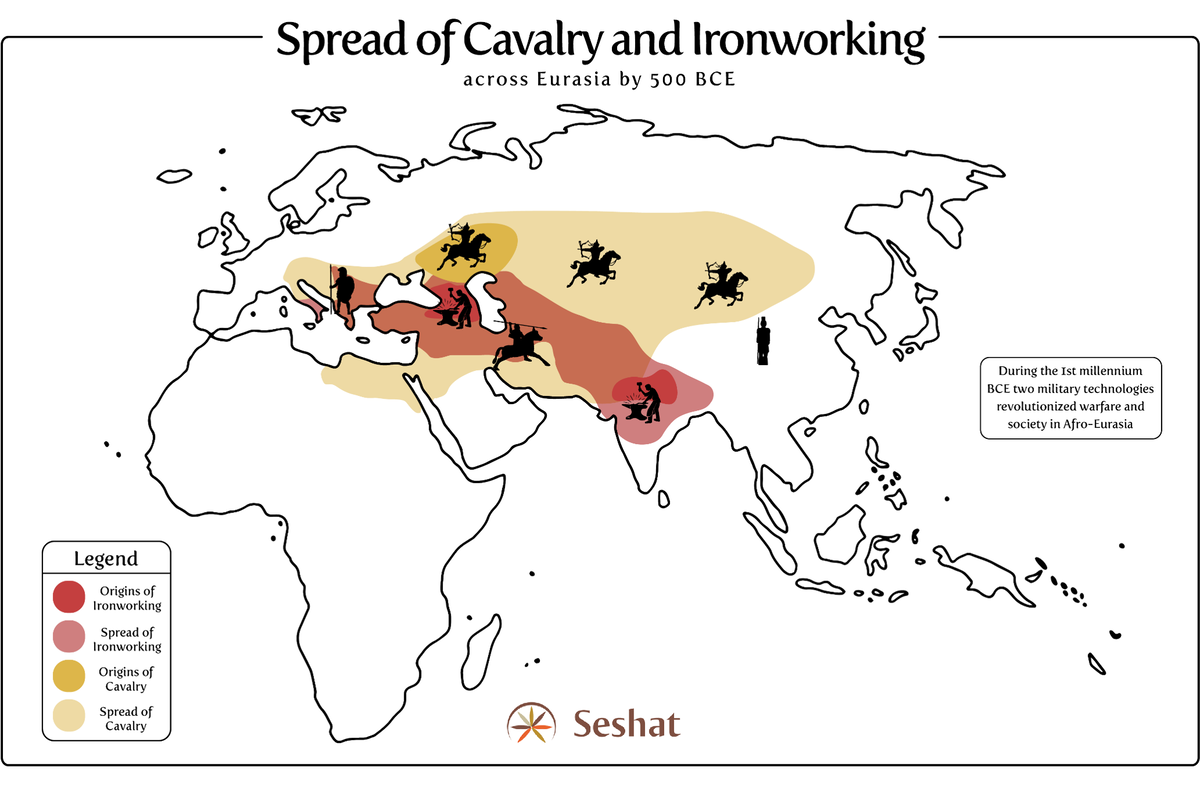
During the Holocene the scale and complexity of human societies increased dramatically. Generations of scholars have proposed different theories explaining this evolution, which range from functionalist explanations, focusing on the provision of public goods, to conflict theories, emphasizing the role of class struggle or warfare. To quantitatively test these theories, I develop a general dynamical model, based on the theoretical framework of cultural macroevolution. Using this model and Seshat: Global History Databank I test 17 potential predictor variables (and >100,000 combinations of these predictors) proxying mechanisms suggested by major theories of sociopolitical complexity. The best-fitting model indicates a strong causal role played by a combination of increasing agricultural productivity and warfare intensity, proxied by invention/adoption of military technologies (most notably, iron weapons and cavalry in the first millennium BCE). Overall, these empirical results support the idea that a major evolutionary force explaining the rise of large-scale complex human societies, organized as states, was Cultural Multi-Level Selection.
About Peter Turchin
Peter Turchin received his Ph. D. from Duke University in 1985, in the disciplines of Zoology and Mathematics. He had started his academic education at Moscow State University, and then moved to the US, where he graduated from New York University in 1980 (B.A. in Biology).
His professional career started out as lecturer at the University of Washington, followed by Visiting Professorships at the Santa Fe Institute, as well as the universities in Aarhus and Toulouse. Between 1994 and 2022 Turchin has been Professor at the Department of Ecology and Evolutionary Biology at the University of Connecticut. He is now Project Leader for Social Complexity and Collapse at the Complexity Science Hub in Vienna Austria.
Applying complex mathematics and a theoretical apparatus of the fields he was trained in, Peter Turchin has, about 25 years ago, begun to analyze the increasingly available enormous amounts of digitized data on human social and political behavior. In his work he searched for statistical patterns and mechanisms, deriving at explanatory models for the gradually emerging typical cyclical patterns (boom-and-bust) in human history. While earlier studies had focused on state-level societies, this scope is currently widened by looking at data from non-state societies.
Apart from numerous grants and high-ranking publications, Peter Turchin is well known for his many academic and popular books, among them End Times (2023), Ultrasocietiy (2016), Secular Cycles (2009), War and Peace and War (2007), or Historical Dynamics (2003).
In his presentation at LEIZA he will cover aspects from his current book, The Great Holocene Transformation: Explaining the Evolution of Complex Societies (in prep.).