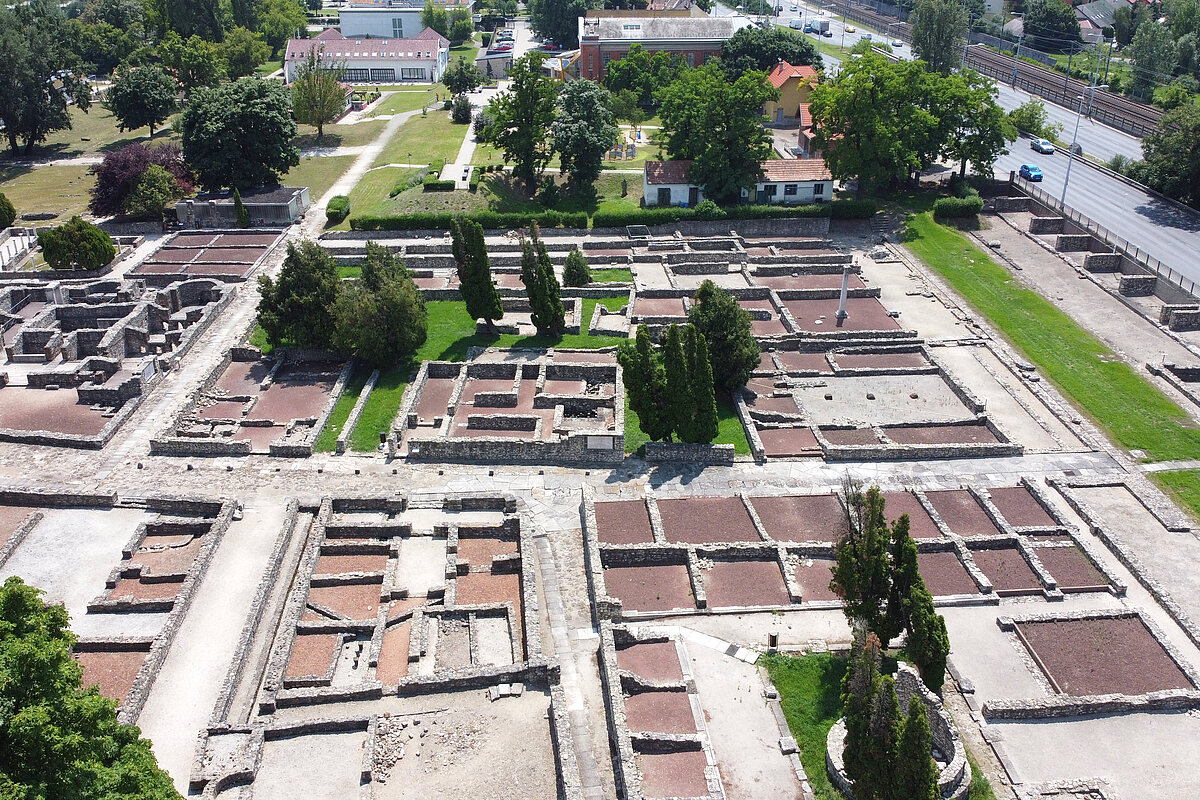
The settlement complex of Aquincum, capital of Pannonia Inferior and later an important urban centre in the province of Valeria, underwent significant transformations between the late 1st and the first third of the 5th century AD. Of particular interest—and still only partially understood—is the gradual abandonment of individual settlement areas (civil and military towns, fortresses, villas) and the transformation of the urban structure from the late 3rd century onwards.
This paper examines the individual components of the settlement complex during the Late Roman period, tracing changes in the structure, extent, and functions of the town. New research results concerning the villas and the civil town will be presented, while the apparent survival of parts of the canabae into the 4th and 5th centuries raises further questions. The paper also discusses the form and topographical location of the Late Roman fortress at Aquincum and the transformation of the so-called Thermae Maiores of the legionary fortress into the palace of the dux.
Der Vortrag ist Teil der Reihe "Mainzer Vorträge zur Römischen Archäologie" (MaVRA), gemeinsam veranstaltet von dem Arbeitsbereich für Klassische Archäologie der Johannes Gutenberg-Universität Mainz und dem Leibniz-Zentrum für Archäologie.
An diesen Tagen hat die Bibliothek bis 18.15 Uhr für Sie geöffnet.